Building the world’s first foundation model for the moon
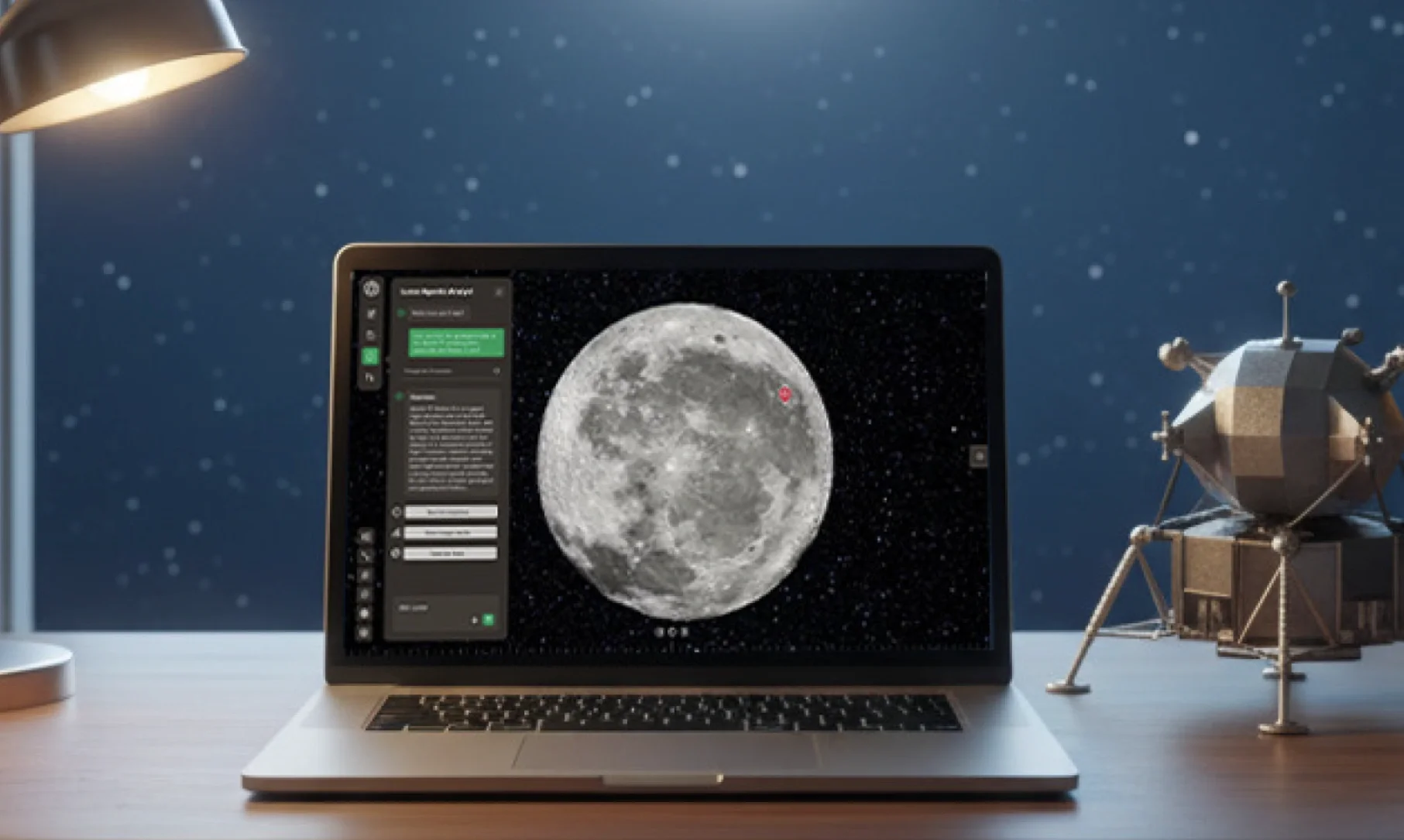
LunarLab by Frontier Development Lab (FDL) applies AI technologies to the lunar environment to push the frontiers of research and develop new tools to help solve some of the biggest challenges that lunar exploration may face.
LunarLab is a partnership between the Luxembourg Space Agency (LSA), the European Space Resources Innovation Centre (ESRIC), and Trillium Technologies. Developed with compute and technical support from Scan, NVIDIA, Google Cloud and specialist geology skills from Datarock.
LunarLab develops AI-driven tools for lunar science and exploration. Users engage with LunarLab in different ways, from scientists validating models to developers integrating data into new tools. By mapping their goals, needs and measures of success, LunarLab ensures its output is practical, valuable and inspiring for all.
Due to the generalisable nature of a foundation model — that is, a single model can be adapted to many different downstream tasks — the team demonstrated this generalisability by using Lunar-FM to generate a global map of titanium dioxide (TiO₂) using only eight validated samples.
Project Results
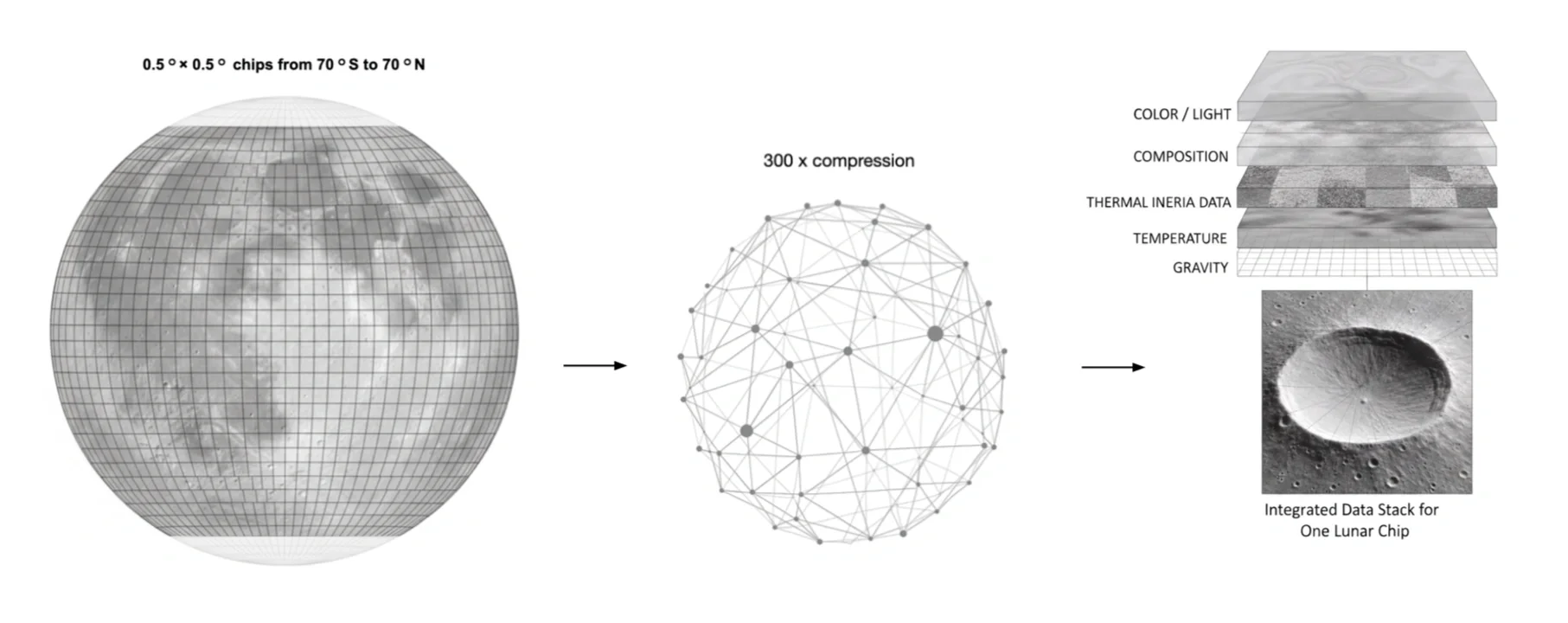
The resulting foundation model, named Lunar-FM, is a significant step forward in planetary science — proving to be a scalable, self-supervised method for integrating 18 heterogeneous data layers across five modalities (optical, topography, thermal, radar, gravity) into a cohesive model for the first time. Lunar-FM is a unified, information-dense 768-dimensional latent embedding space that represents global lunar properties at a 0.5° × 0.5° resolution. The team's achievement standardises data representation, achieving a 300x data compression while retaining rich semantic information required for diverse downstream tasks including terrain classification, anomaly detection, rare feature discovery and global mapping based on sparse samples.